
epocrates: Drug Info & Pill ID
Epocrates, Inc.Medical
2.75.45K Reviews
- Version
- 26.8.1
- Installs
- 1.00M
- Age Rating
- Everyone
Screenshots
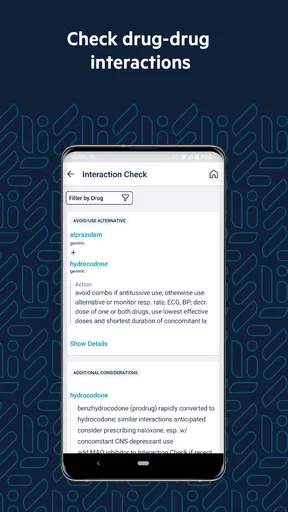
Our Review of epocrates: Drug Info & Pill ID
 Analysis by Appyee
I find epocrates most useful when a medication question needs a quick, organized starting point rather than a long web search. It is a medical reference app from Epocrates, Inc., and its appeal is practical: look up a drug, check possible interactions, or review dosing information in one place. I would treat it as a tool for preparing better questions and supporting professional reference work, not as a substitute for a clinician or pharmacist who knows the person and the full situation.
Who benefits from a focused drug reference
The app makes the most sense for healthcare professionals who regularly need to check medicines during a busy day, and for patients or caregivers who want to understand a prescription before discussing it with a care team. Its pill identification and interaction-checking tools address different everyday needs: one helps investigate an unfamiliar tablet, while the other can organize a medication-safety question around several drugs.
For example, imagine a caregiver reviewing a relative’s medicine list before an appointment. Looking up each name first can help them notice unfamiliar terms and write down what they want to ask, while an interaction check can give them a focused topic to raise with the clinician or pharmacist. I would not use a result as permission to stop, combine, or change a medicine. The useful workflow is to gather the names and questions, then confirm any decision with a qualified professional.
Reading and navigating without rushing
When I use a medical reference, clarity matters more than decorative design. epocrates is organized around searches and reference tasks, so a user can approach it with a specific drug or question in mind instead of browsing a general health feed. That focused structure is helpful when time is short, though it still assumes the person knows what they are trying to find. Someone who has only a partial name, a misspelled label, or a vague symptom may need help from a pharmacist or another source before the app becomes useful.
A practical habit is to check the exact medicine name and formulation before relying on a result. Similar names and different forms of a drug can matter, and a quick search is only as good as the match selected. I also prefer to keep a separate written list of questions for an appointment rather than treating a saved reference as a complete medication record. That small distinction makes the app more useful without asking it to do a job it is not designed to replace.
Access in different settings
A phone-based reference can be convenient at a clinic, pharmacy, or home medicine cabinet, especially when a paper leaflet is not close at hand. The app’s search-oriented approach can also suit a professional who wants to look up a detail between tasks. But the setting changes what is practical: in a noisy or hurried conversation, reading a longer entry may be less useful than noting the drug name and asking a direct question. I would avoid making a medication decision while distracted or trying to interpret a result for someone else without their full history.
The app is free to download, is rated for Everyone, and has more than a million installs. It has an average rating of 2.7 from around 26,000 ratings, which is a reminder that a large audience does not mean every user finds the experience smooth. Its current version is 26.2.0, and it requires Android 9 or later on Android devices. Optional in-app purchases range from $12.99 to $224.99 per item, so it is sensible to check what a particular paid option covers before committing. The app has been available since February 22, 2010, and its long history has not removed the need to decide whether its current workflow suits you.
Where another option may be better
Compared with a general web search, a dedicated drug reference can keep medication information and interaction checking closer together, which is useful when a question is specifically about medicines. Compared with a conversation with a pharmacist, however, it cannot ask follow-up questions about allergies, the reason for treatment, other conditions, or how a dose was prescribed. For a one-off question about a new prescription, I would use the app to get oriented and then ask the prescriber or pharmacist to interpret anything that affects care. For symptoms, urgent reactions, or uncertainty about whether to take the next dose, direct professional advice is a better choice than browsing.
There is also a difference between a quick lookup and sustained professional use. Someone who only checks a medicine occasionally may find the free download sufficient, while a clinician who depends on deeper reference material should weigh the recurring value of paid features against their own workflow. The available purchase range is broad enough that I would not assume every paid item is necessary. Start with the task you actually need, see whether the free tools address it, and only then consider an upgrade.
Getting Started with epocrates
First things first, downloading and setting up epocrates is a breeze. Available on both Android and iOS, the app is free to download, with some additional features available through a subscription. Once you fire it up, you’re greeted by a clean and intuitive interface that even the least tech-savvy among us can navigate with ease. I felt right at home, clicking through its various features.
Features Galore
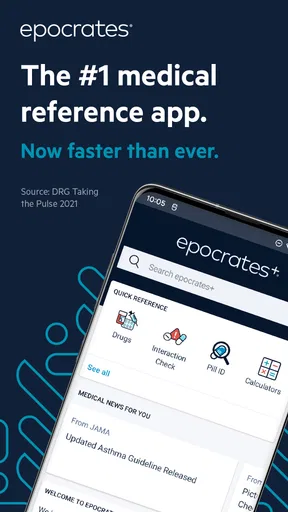
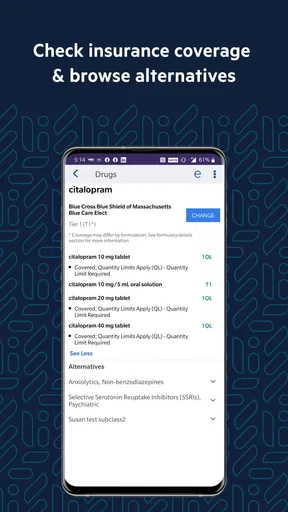
The main attraction here is the Drug Checker. You can search for any medication by name, and epocrates provides a comprehensive rundown, including dosage, contraindications, and side effects. This is a lifesaver when you're trying to figure out what that new prescription from your doc is all about. It’s like having a cheat sheet for meds.
But wait, there’s more! The app also includes a drug interaction checker. Just input the medications you’re taking, and it’ll let you know if there are any potential red flags. This feature alone is worth its weight in gold for anyone juggling multiple prescriptions.
More Than Just a Drug Encyclopedia
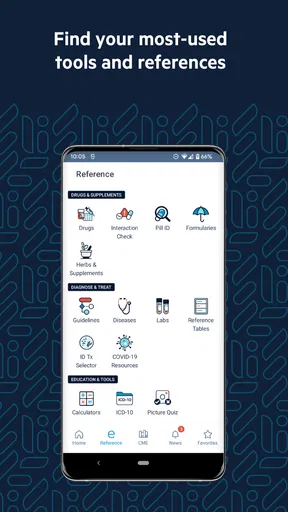
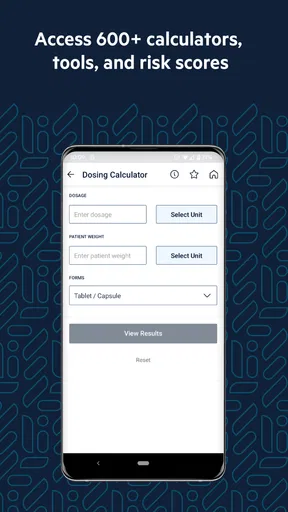
Beyond drugs, the app offers a wealth of medical calculators and guidelines. Whether you need to calculate a BMI or figure out the correct pediatric dosing, epocrates has got your back. This makes it a great tool not just for patients but also for healthcare professionals who need quick, reliable info on the fly.
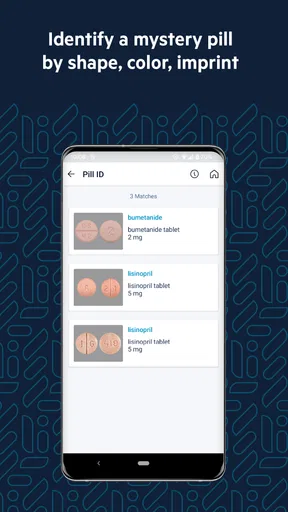
Another cool feature is the pill identifier. Ever found a stray pill in your medicine cabinet and wondered what it was? Snap a picture, and epocrates will help you identify it. It’s like having Sherlock Holmes as your personal pharmacist.
The User Experience
Using the app feels pretty seamless. The search functionality is robust, and the information is presented in a clear, concise manner. I particularly appreciate the ability to bookmark frequently referenced drugs or calculators. It’s those little touches that make the app feel personal and highly usable.
However, while the free version is quite feature-rich, some advanced features are locked behind a paywall. It’s not a deal-breaker, but if you’re looking for the full suite, you might need to shell out a few bucks. That said, the extra cost might be worth it for healthcare professionals who need in-depth data regularly.
Wrapping Up
In a world where medical information is often overwhelming, epocrates is a breath of fresh air. It simplifies the complex, making it accessible to both medical professionals and curious patients. Whether you're a doctor needing a quick reference or just someone trying to keep track of your meds, epocrates is a tool worth checking out.
So, if you're looking to take the mystery out of medication, give epocrates a spin. It’s like having a trusty sidekick, ready to help at a moment’s notice. Now that’s peace of mind you can download.
A more careful way to use the pill identifier
The pill-identification tool is tempting when a tablet has been separated from its packaging, but identification should be treated as a lead, not proof. A photo or appearance alone cannot establish that a pill is safe to take, and a mistaken match could have serious consequences. I would compare any possible result with the original labeled container and ask a pharmacist to confirm it. If the pill is unknown and no reliable packaging remains, the safest choice is not to take it based on an app result.
That makes the feature most helpful in a low-pressure check, such as sorting out a medicine cabinet before discarding expired or unidentified items. It is less appropriate during an emergency or when someone needs to decide immediately whether a tablet belongs to them. In those cases, a pharmacist, poison-control service, or emergency professional is the better resource, depending on the situation.
Motor and sensory considerations
A search-first app can reduce the steps involved in finding a familiar medication, but it still depends on being able to enter or select the right name and read the result. People with low vision, dyslexia, tremors, limited dexterity, or difficulty processing dense medical language may find a medication reference more demanding than its straightforward purpose suggests. I would test it with the actual tasks that matter—finding a drug, checking a list, and returning to a saved item—before relying on it in a time-sensitive setting.
One useful adjustment is to do a lookup in a calm moment, then bring the question to a clinician rather than trying to read a long entry while someone is waiting. A caregiver can also help by recording the exact medicine name and the specific concern in plain language. This keeps the app’s role narrow and reduces the chance that a person has to navigate unfamiliar terminology under pressure.
Choosing between app, professional advice, and general search
For a clinician who repeatedly checks medication details, a purpose-built reference can be more convenient than opening unrelated web pages one by one. For a patient comparing broad treatment choices, a conversation with the prescriber may be more useful than a technical drug entry. General search can help explain a term in everyday language, but results may mix reliable medical sources with material that is not tailored to the individual. I see epocrates as a middle ground for structured drug reference, not as the final authority for personal treatment.
It is also worth remembering that an interaction result is only meaningful when the list is complete and accurate. Include the medicines relevant to the question, and do not assume a partial list represents the whole picture. Prescription drugs, nonprescription products, and other substances can all matter to a professional review. If you are unsure what belongs in the check, bring the full list or the packages to a pharmacist rather than trying to guess.
An inclusive verdict for the right kind of question
My overall view is that epocrates is strongest when someone knows the medication name and wants a structured reference point quickly. The searchable drug information, interaction checks, calculators, guidelines, and pill-identification function give it a broader role than a basic medicine glossary. Its main trade-off is that it can make information easier to reach without making clinical decisions simple: interpreting an entry still calls for context, and some deeper tools come at an added cost.
I would recommend trying it if you are a healthcare professional who needs a mobile drug reference, or a patient who wants to prepare informed questions and can keep a clinician involved. I would skip it as a stand-alone solution for diagnosis, urgent symptoms, or deciding whether to change a treatment. For someone who needs enlarged text, audio support, or a particularly simple interface, the best choice is the reference they can comfortably use alongside help from a pharmacist or care team. Used with those boundaries in mind, it can make medication questions more organized without pretending to replace the people responsible for care.
Verdict
Strengths of epocrates: Drug Info & Pill ID
- Comprehensive drug database.
- User-friendly interface.
- Fast interaction and search.
- Offline access available.
- Regular updates and alerts.
Limitations of epocrates: Drug Info & Pill ID
- Limited features in free version.
- No pill identifier feature.
- Requires internet for some tools.
- Subscription can be pricey.
- Occasional login issues.
Similar Picks in This Category
View All
WebMD: Symptom Checker
WebMD, LLC4.1

Microphone Amplifier
DOSA Apps4.2

Anatomy Learning - 3D Anatomy
3D Medical OU4.5

Period Tracker and Calendar
SimpleInnovation4.9

GoodRx: Prescription Coupons
GoodRx4.8

CVS Health
CVS Pharmacy4.5
Frequently Asked Questions
What features does the Epocrates app offer?
Epocrates provides a comprehensive suite of tools for healthcare professionals, including drug interaction checkers, pill identification, and clinical guidelines. The app also features a robust database of medications and their effects, dosing calculators, and patient education materials. Its intuitive interface allows for quick access to vital information, making it a valuable resource for medical practitioners.
Is the Epocrates app available for both Android and iOS?
Yes, Epocrates is available on both Android and iOS platforms. Users can download the app from the Google Play Store for Android devices and the Apple App Store for iOS devices. The app is designed to seamlessly integrate across platforms, ensuring that healthcare professionals can access crucial information regardless of their device choice.
Does Epocrates require a subscription for full access?
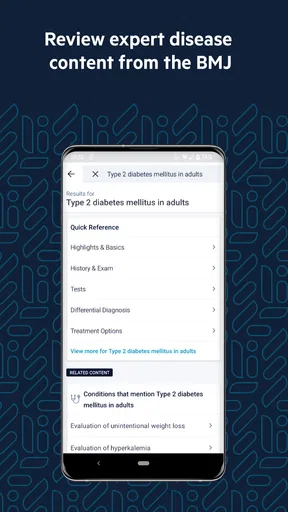
Epocrates offers both free and premium versions. The free version includes basic features such as drug information and interaction checkers. However, for more advanced features like disease content and alternative medicine information, a subscription to Epocrates Plus is required. This premium access provides a more in-depth resource for healthcare professionals seeking comprehensive data.
How accurate and reliable is the information provided by Epocrates?
Epocrates is widely respected for its accuracy and reliability, trusted by millions of healthcare professionals. The app's content is regularly updated by a team of medical experts to ensure it reflects the latest clinical guidelines and pharmaceutical data. This commitment to accuracy makes Epocrates a dependable tool for informed decision-making in clinical settings.
Can Epocrates function offline, and what are the benefits of this feature?
Yes, Epocrates can function offline, allowing users to access critical drug information and tools without an internet connection. This is particularly beneficial for healthcare providers working in areas with limited connectivity or during emergencies when rapid access to information is crucial. Offline access ensures that users have the data they need at their fingertips, anytime and anywhere.
